Need exact pricing after reading? Jump straight to the AI API pricing table, the AI cost estimator, or the AI model cost comparison to price the workflow in this article with your own traffic and token counts.
Compare per-token prices across OpenAI, Claude, Gemini, DeepSeek, Mistral, and more.
Turn token counts and request volume into cost per request, daily spend, and monthly spend.
See which model is cheaper for the exact workload this article is talking about.
Mistral launched Shieldstral on August 4, 2026: a 3B open-weights multimodal moderation model designed to classify text and images, run on-device, and follow plain-language moderation policies. That combination matters because safety infrastructure has been stuck between two bad choices: cheap keyword filters that miss context, or hosted frontier-model moderation stacks that become expensive, slow, and hard to customize at marketplace scale.
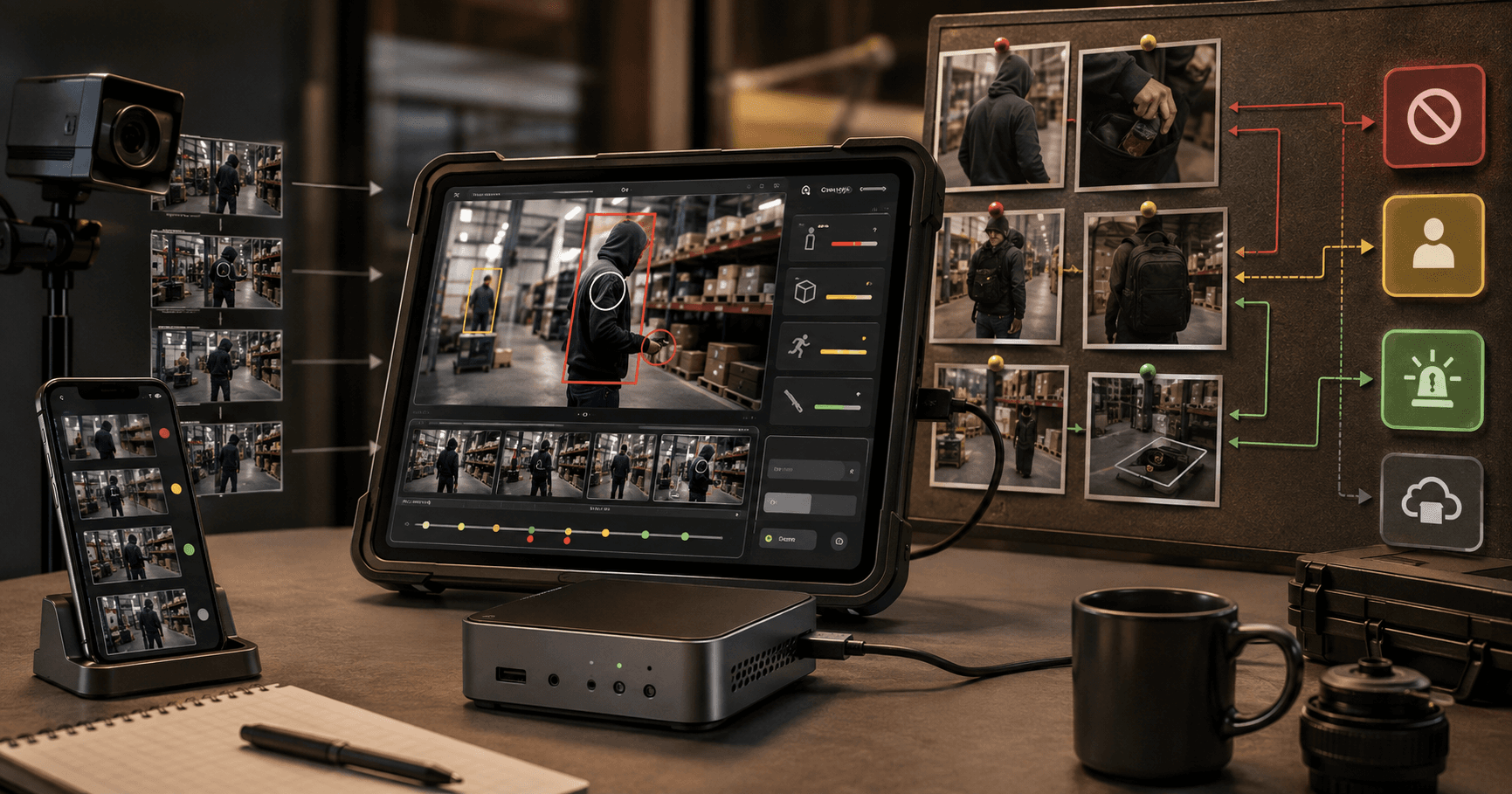
Shieldstral changes the moderation architecture for builders. Instead of sending every post, listing, comment, profile photo, support attachment, and chat message to a large hosted model, teams can move the first-pass safety layer closer to the user: mobile devices, edge workers, regional inference servers, marketplace upload flows, or internal review queues. For AI Cost Check readers, the practical question is not “what is the price of Shieldstral?” It is: which safety workflows become cheaper, faster, and more controllable now that a small open multimodal moderator exists?
This post breaks down what changed, why ops and product teams should care now, seven workflows Shieldstral can unlock, two copyable implementation outlines, and how to choose between Shieldstral, hosted general-purpose models such as GPT-5 mini, Gemini 2.5 Flash, Mistral Small 4, and premium models like Claude Sonnet 5. Cost is the proof layer: the biggest savings come from routing most moderation events through a small policy model and reserving premium models for appeals, ambiguous cases, and policy audits.
💡 Key Takeaway: Shieldstral’s main advantage is not raw intelligence. It is deployment control: a 3B open-weights text-and-image moderator can sit inside upload flows, mobile apps, edge locations, and human review systems where hosted premium models are too slow, expensive, or rigid.
What changed with Shieldstral
Shieldstral is notable for four reasons: it is small, multimodal, open-weights, and policy-adaptive. Each trait attacks a real moderation bottleneck.
First, 3B parameters means the model can run in places where larger VLMs and LLMs are impractical. A safety classifier does not need to write code, solve graduate math, or plan a multi-step agent run. It needs to map content to policy categories reliably enough to decide: allow, block, blur, age-gate, downrank, queue for review, or escalate. A 3B model is the right size for high-volume screening when latency and cost matter.
Second, multimodal moderation matters because UGC platforms are no longer text-only. Marketplaces receive product photos and listing descriptions. Dating apps combine bios, images, and chat. Support desks receive screenshots. Creator tools process captions, thumbnails, and comments. A text-only safety layer misses violations embedded in images; an image-only classifier misses context in captions. Shieldstral’s text-and-image capability lets builders moderate the combined object rather than split it across fragile rule systems.
Third, open weights change the deployment model. Teams can run Shieldstral on their own infrastructure, tune inference settings, inspect outputs, keep sensitive content inside regional boundaries, and build fallback routing. Hosted moderation APIs are still useful, but they centralize cost, latency, and vendor dependency.
Fourth, plain-language policy adaptation is the operational unlock. Many moderation systems fail because policy teams write rules in human language, engineering teams translate those rules into classifier labels, and reviewers interpret edge cases differently. A model that can follow plain-language moderation policies narrows that gap. Product and trust-and-safety teams can iterate policies without retraining a full custom model for every wording change.
[stat] 3B parameters Shieldstral is small enough to become a first-pass moderation layer for high-volume text-and-image workflows instead of a premium model call on every event.
Why builders and ops teams should care now
Moderation volume is exploding because AI products generate and transform more content per user action. A single user prompt can produce five images, a video thumbnail, a product description, a social caption, and a comment thread. Marketplaces and creator platforms now need safety checks at generation time, upload time, publish time, recommendation time, and appeal time.
The old approach—send suspicious items to humans and everything else to a generic hosted model—breaks under this volume. Human review queues grow. Hosted model costs rise with every retry and batch. Latency hurts conversion when users wait on listing approvals or image uploads. Worse, generic safety models often do not understand the specific policy differences that matter to a business: allowed swimwear versus sexual content, permitted medical education versus harmful medical advice, toy weapons versus real weapons, satire versus targeted harassment, or legal adult products versus prohibited listings.
Shieldstral gives teams a practical middle layer. You can keep deterministic checks for obvious cases, use Shieldstral for contextual first-pass decisions, route uncertain events to a stronger hosted model, and reserve human reviewers for the cases where business risk is highest. This is the architecture most teams wanted but could not justify building with larger models.
The timing also matters because AI apps are moving to the edge. Mobile AI assistants, offline drafting tools, local-first creative apps, enterprise copilots, and device-side agents need guardrails before content leaves the device. A small open-weights moderator can run near the action: before an image is uploaded, before a generated response is shown, or before a child account shares a message.
⚠️ Warning: Do not replace human review with any automated moderator for legally sensitive categories. Use Shieldstral to reduce queue volume, normalize policy labels, and prioritize review—not to make irreversible enforcement decisions for high-risk cases.
Seven practical workflows Shieldstral makes possible
1. Cheaper text-and-image UGC moderation
The most direct use case is first-pass moderation for user-generated content. A marketplace listing can include a title, description, seller notes, and multiple images. A forum post can include a comment, screenshot, and profile metadata. Shieldstral can classify the combined submission against a plain-language policy and return structured outputs such as category, severity, confidence, rationale, and recommended action.
This replaces a brittle workflow where text goes through one system, images go through another, and a rule engine tries to reconcile them. Builders can use Shieldstral to generate one decision object per content item: allow, warn, hide pending review, block, or escalate.
2. Marketplace listing safety and prohibited-item detection
Marketplaces need policy nuance. A chef’s knife may be allowed; a concealed weapon may not be. Vintage medical collectibles may be allowed; controlled substances are not. Product photos often carry the decisive evidence. Shieldstral’s multimodal input lets teams compare listing text against visual content and flag mismatches, evasive language, or policy conflicts.
The biggest win is review prioritization. Shieldstral can assign severity and reason codes so reviewers see the highest-risk listings first. Low-confidence cases go to humans, while clear allow/block cases move automatically under policy thresholds.
3. Mobile and edge guardrails for AI apps
On-device moderation is the headline capability. AI writing apps, image editors, chat products, and child-safety tools can run a lightweight moderation check before content is uploaded or displayed. This reduces round trips, preserves privacy, and keeps obvious violations from reaching backend systems.
For mobile apps, the model can be packaged as a local safety gate for draft content. For edge deployments, it can run in regional inference clusters close to users. The right implementation depends on hardware constraints, but the product pattern is the same: safety decisions happen earlier.
4. Human review triage and reviewer assist
Moderation teams rarely need AI to make every final decision. They need the queue to be sorted, labeled, deduplicated, and summarized. Shieldstral can assign policy labels and produce short rationales, then push ambiguous cases into review tooling.
A reviewer assist screen can show the original content, Shieldstral’s category, the exact policy clause it matched, confidence, and comparable past decisions. This makes reviewers faster and improves consistency across shifts and regions.
5. Custom policy enforcement for niche communities
Generic safety policies are too broad for many products. A gaming community, medical forum, education platform, dating app, enterprise knowledge base, and kids’ creative app each needs different rules. Shieldstral’s plain-language policy adaptation makes it useful for niche policy enforcement without a full ML retraining workflow.
A community team can define policies in readable form: “Allow fictional fantasy violence in game discussion, but flag realistic threats against real people.” The model can then classify content against that policy and return the policy section that triggered the decision.
6. AI generation preflight checks
Generative AI products should check both prompts and outputs. Shieldstral can run as a preflight filter before expensive generation and as a post-generation filter before content is shown. For image generation, it can inspect generated images plus prompt metadata. For text generation, it can flag unsafe outputs, policy violations, or cases requiring a safer rewrite.
This reduces wasted premium model calls. If a user request clearly violates policy, block or redirect before invoking a large generator. If the output is borderline, route to a stronger model or human review.
7. Regional privacy-preserving moderation
Some teams cannot send sensitive user content to external APIs because of contractual, regulatory, or data residency constraints. Open-weights deployment gives those teams a path to local or private-cloud moderation. Shieldstral can run inside a VPC, regional data center, or customer-controlled environment while still supporting modern multimodal checks.
This matters for healthcare platforms, schools, enterprise collaboration tools, and regulated marketplaces. The goal is not only lower cost; it is keeping moderation data inside the right trust boundary.
Workflow 1: Build a marketplace listing moderation pipeline
A marketplace safety pipeline needs to evaluate text, images, seller metadata, and policy context before a listing goes live. Shieldstral fits as the first intelligent classifier after basic rules and before human review.
Step 1: Define policy in plain language
Start with a concise policy document. Do not hand the model a 60-page legal policy for every call. Create a moderation rubric with allowed, restricted, and prohibited categories.
Example policy structure:
- Prohibited: illegal drugs, real firearms, counterfeit documents, sexual exploitation, doxxing, hate symbols.
- Restricted: adult products, medical devices, knives, alcohol, regulated collectibles.
- Allowed with context: kitchen tools, educational medical books, historical items, cosplay props.
- Actions: allow, age-gate, hold for review, block, escalate.
Include examples for tricky boundaries. The model should see the difference between “kitchen knife in cookware category” and “combat knife marketed for concealment.”
Step 2: Preprocess the listing object
Combine title, description, category, seller-provided attributes, OCR from images, and image thumbnails into one moderation request. Use deterministic rules first for exact banned terms, known bad hashes, and seller sanctions. Shieldstral should handle contextual cases, not replace fast rules.
Step 3: Ask for structured output
Require JSON output with fixed fields:
decisionpolicy_categoryseverityconfidenceevidencerecommended_actionreviewer_note
This makes it easy to route decisions. A high-confidence prohibited item can be blocked. A restricted item can be age-gated or sent to review. A low-confidence item should not be auto-blocked.
Step 4: Route by confidence and severity
Use three lanes:
- Auto-allow: low severity, high confidence, no policy match.
- Auto-block or hold: high severity, high confidence, clear policy match.
- Human review: medium confidence, restricted categories, seller appeals, or high-value accounts.
Step 5: Log outcomes for policy tuning
Store the model output, final human decision, appeal outcome, and policy version. This creates an audit trail and lets the safety team improve prompts, thresholds, and examples.
✅ TL;DR: For marketplaces, Shieldstral is best used as a first-pass multimodal classifier that turns messy listings into structured policy decisions. Keep deterministic rules for obvious violations and humans for high-risk appeals.
Workflow 2: Add on-device guardrails to a mobile AI app
Mobile AI apps need fast safety checks that do not send every draft, photo, or prompt to the cloud. Shieldstral enables a local guardrail layer for apps that create or transform user content.
Step 1: Choose what runs locally
Run lightweight checks locally for prompts, captions, uploaded images, and generated previews. Keep heavy reasoning, appeals, and policy audits on the backend. The goal is to prevent obvious violations early, not to adjudicate every edge case on-device.
Step 2: Package a compact policy
Ship a short policy bundle with the app. It should include the active policy version, restricted categories, user-age rules, and recommended UX responses. For example, a teen creative app may block sexualized imagery, self-harm instructions, and targeted harassment while allowing fictional fantasy scenes.
Step 3: Moderate before upload and before display
Use Shieldstral twice:
- Before upload: check user-submitted images and text.
- Before display: check generated or transformed content before showing it.
This prevents backend storage of obvious violations and reduces the chance that unsafe generated content is shown to users.
Step 4: Use local decisions for UX, not final enforcement
If the local model flags content, show a clear policy message or safe-edit suggestion. For severe cases or repeated violations, send metadata and user-consented content to the server for review. Avoid permanent account penalties based only on local inference.
Step 5: Sync policy updates
Moderation policy changes often. Build a policy update mechanism so the app can receive new plain-language rules without a full app release. Track policy version with every decision.
Step 6: Add a hosted fallback for ambiguous cases
When Shieldstral returns low confidence, route the item to a hosted model such as Gemini 2.5 Flash, Mistral Small 4, or GPT-5 mini. Use a premium model only for sensitive appeals or policy disputes.
Model choice and cost
Shieldstral’s open-weights model changes the cost equation because there is no per-token API price in the same way as hosted models. Your cost comes from compute, device constraints, engineering time, monitoring, and reviewer operations. Hosted models charge by tokens, but require less infrastructure.
For cost comparisons, the right unit is a moderation event. Assume a typical event contains 1,000 input tokens of policy, metadata, OCR, and text, plus 200 output tokens of structured labels and rationale. Image processing costs for hosted multimodal models vary by provider implementation, so the token-only estimates below are conservative for text-heavy moderation events and should be treated as baseline planning numbers.
| Model or approach | Input / output price per 1M tokens | Context | Estimated text event cost | Best use |
|---|---|---|---|---|
| Shieldstral self-hosted | Infrastructure-based | Depends on deployment | Compute-based, not token API priced | High-volume first-pass text-and-image moderation |
| Mistral Small 4 | $0.15 / $0.60 | 128K | $0.00027 | Cheap hosted fallback and policy classification |
| Gemini 2.5 Flash-Lite | $0.10 / $0.40 | 1M | $0.00018 | Low-cost hosted classification at scale |
| Gemini 2.5 Flash | $0.30 / $2.50 | 1M | $0.00080 | Stronger general moderation and routing |
| GPT-5 mini | $0.25 / $2.00 | 500K | $0.00065 | Balanced hosted policy reasoning |
| GPT-5 | $1.25 / $10.00 | 1M | $0.00325 | Complex appeals and policy interpretation |
| Claude Sonnet 5 | $2.00 / $10.00 | 1M | $0.00400 | High-quality reviewer assist and nuanced appeals |
The formula is straightforward:
- Input: 1,000 tokens × price per 1M
- Output: 200 tokens × price per 1M
- Event cost = input cost + output cost
For Mistral Small 4, that is $0.00015 input plus $0.00012 output, or $0.00027 per text event. For 1 million moderation events, that baseline is $270 before image-specific billing, retries, storage, and review tooling.
For Claude Sonnet 5, the same text event is $0.004, or $4,000 per 1 million events. That premium can be worth it for appeals, brand-risk decisions, and nuanced policy adjudication. It is overkill for routine first-pass screening of comments, product listings, thumbnails, or obvious spam.
Shieldstral competes differently. If you already operate GPU or edge inference infrastructure and process millions of events, self-hosting can beat hosted per-token pricing because marginal cost drops as utilization improves. If your volume is low, hosted models are cheaper to launch because you avoid deployment and monitoring work.
A practical routing stack looks like this:
- Rules and hashes: exact bans, known bad media, rate limits.
- Shieldstral: first-pass multimodal policy decision.
- Cheap hosted fallback: Gemini 2.5 Flash-Lite, Mistral Small 4, or Command R for text-heavy ambiguous cases.
- Premium adjudication: GPT-5, Claude Sonnet 5, or Gemini 3 Pro for appeals and complex policy interpretation.
- Human review: legally sensitive, high-impact, or low-confidence enforcement.
📊 Quick Math: A hosted fallback at $0.00027 per text event costs about $27 per 100,000 events. A premium model at $0.004 per event costs $400 per 100,000 events. Routing only 10% of events to the premium model cuts that premium layer from $400 to $40 per 100,000 events.
Use AI Cost Check to plug in your own token counts, event volume, and routing percentages. If your moderation prompt includes long policy text, reviewer history, or multiple extracted OCR blocks, your input tokens can exceed 3,000-5,000 tokens per event. That is where routing and policy compression become mandatory.
When Shieldstral beats larger moderation stacks
Shieldstral is strongest when volume, latency, privacy, and policy customization matter more than frontier reasoning.
Use Shieldstral when you have high event volume. Social apps, marketplaces, creator tools, and support platforms can generate hundreds of thousands or millions of moderation events per month. A small local model can process the majority of those events without paying premium API rates for every item.
Use it when latency affects conversion. If a seller waits several seconds for listing approval, completion rates drop. If a mobile app must upload an image before saying whether it is allowed, UX feels slow and invasive. Local or edge moderation creates instant feedback.
Use it when content is sensitive. Schools, healthcare communities, internal enterprise tools, and private messaging products may prefer not to send every image or message to a third-party API. Open-weights deployment supports private inference and regional controls.
Use it when your policy is specialized. Generic moderation APIs are designed around broad categories. Product-specific policies need context: cosplay weapons, breastfeeding images, harm-reduction discussions, medical education, political satire, or adult collectibles. Plain-language policy adaptation is useful when policy changes faster than model retraining cycles.
Use it when you need a triage layer, not a judge. Shieldstral can sort, label, and prioritize. Larger models and humans can handle the final calls.
When a premium hosted model is overkill
Premium hosted models are overkill for first-pass moderation when the decision space is repetitive and the business action is reversible. Blocking spam comments, hiding obvious explicit images pending review, flagging prohibited marketplace terms, or labeling likely policy categories does not require a top-tier reasoning model on every event.
Premium models are also overkill when your policy prompt is short and your outputs are fixed labels. If the model only needs to return allow, block, or review, paying for a general-purpose frontier model is wasted budget. Use Shieldstral or a low-cost hosted model and escalate only when confidence is low.
Do not use premium models for every image in a batch upload. Run basic image hashing and Shieldstral first. Send only suspicious, high-value, or ambiguous items to a larger hosted model.
Do not use premium models as a substitute for policy work. If your rules are vague, a larger model will produce more persuasive inconsistency. Write a clear policy, add examples, define thresholds, and measure outcomes.
Premium models still belong in the stack. Use them for appeals, policy audits, reviewer explanation generation, and edge cases where context spans long histories. For example, GPT-5 with 1M context can inspect long account histories, while Claude Sonnet 5 is a strong fit for nuanced reviewer-assist summaries. Compare tradeoffs on pages like GPT-5 vs Claude Sonnet 4.5 or GPT-5 vs Gemini 3 Pro when choosing an escalation model.
Deployment tradeoffs: on-device, edge, self-hosted, or hosted fallback
Shieldstral gives builders deployment choices, but each choice has a different operating profile.
| Deployment pattern | Strength | Tradeoff | Recommended for |
|---|---|---|---|
| On-device | Lowest latency, privacy-preserving, offline-capable | Device variability, model packaging, update complexity | Mobile AI apps, child-safety tools, local-first editors |
| Edge inference | Fast regional moderation, lower backend load | Requires edge GPU or optimized runtime | Consumer apps, marketplaces, upload flows |
| Private cloud / VPC | Data control, centralized observability | Infrastructure and ops burden | Regulated platforms, enterprise tools |
| Hosted fallback only | Fastest to launch | Per-token cost and vendor dependency | Low-volume products, prototypes |
| Hybrid routing | Best cost-control and quality balance | More engineering complexity | Scaling UGC, marketplaces, creator platforms |
The hybrid pattern is the default recommendation. Start with hosted fallback models while you evaluate Shieldstral quality. Once you have logs, thresholds, and a policy rubric, move high-volume first-pass traffic to Shieldstral. Keep hosted models for low-confidence and appeal cases.
Monitoring matters. Track false positives, false negatives, appeal reversal rates, reviewer agreement, latency, cost per 1,000 events, and policy-category distribution. A moderation model that blocks too aggressively can damage growth. A model that under-flags risky content can create legal and brand exposure.
Security also matters. Open weights do not remove adversarial behavior. Users will use misspellings, image edits, screenshots of text, coded language, and borderline context. Add OCR, perceptual hashing, abuse-rate signals, account reputation, and reviewer feedback loops.
⚠️ Warning: A small multimodal model should not be your only defense against adversarial abuse. Pair Shieldstral with OCR, hash matching, rate limits, reputation signals, audit sampling, and premium-model escalation.
Recommended moderation architecture
For most teams, the best Shieldstral architecture is a five-stage moderation router.
Stage 1: Deterministic prechecks
Run fast checks before model inference. These include banned hashes, exact prohibited terms, account sanctions, duplicate spam detection, upload limits, and known scam templates. This is cheaper and faster than any model.
Stage 2: Shieldstral first-pass classification
Send the content object, compressed policy, and required JSON schema to Shieldstral. Keep the prompt short and versioned. Include only the policy sections relevant to the content type.
Stage 3: Confidence-based routing
Route based on severity and confidence. High-confidence safe content is allowed. High-confidence severe violations are blocked or held. Medium-confidence content goes to a hosted model or human queue.
Stage 4: Escalation model or reviewer assist
Use a stronger model when the decision requires more context or explanation. GPT-5 mini is a cost-effective hosted escalation model at $0.25 / $2.00 per 1M tokens. Gemini 2.5 Flash is another practical option at $0.30 / $2.50 per 1M tokens with a 1M context window. Use premium models for appeals and complex policy disputes.
Stage 5: Human review and feedback
Human decisions should update thresholds and policy examples. Reviewers should see the model’s evidence, not just the label. Policy teams should inspect disagreement clusters weekly.
This architecture reduces spend because every tier has a purpose. Rules handle the obvious. Shieldstral handles volume. Cheap hosted models handle uncertainty. Premium models handle nuance. Humans handle accountability.
Risks and limits
Shieldstral’s size is an advantage for deployment, but it also defines its limits. A 3B model will not match the broad reasoning and world knowledge of a large frontier model. It may struggle with highly coded language, cultural context, satire, adversarial image edits, or policy cases requiring long account history.
Multimodal moderation also raises fairness concerns. Image classifiers can over-flag certain communities, contexts, or cultural symbols if policies and evaluation sets are weak. Teams should measure false positive rates across categories and create appeal paths.
Plain-language policies are powerful, but they can be inconsistent if poorly written. Avoid vague instructions like “block inappropriate content.” Use category definitions, severity levels, examples, and counterexamples. Version every policy and log which version produced each decision.
On-device deployment introduces update risk. A stale policy embedded in an old app version can produce inconsistent enforcement. Build remote policy updates and server-side overrides.
Finally, moderation cost is not just inference. Human review, appeals, QA sampling, analytics, incident response, and legal review all matter. Shieldstral can reduce the volume and improve triage, but it does not eliminate the operating system around trust and safety.
Frequently asked questions
What is Mistral Shieldstral?
Mistral Shieldstral is a 3B open-weights multimodal moderation model launched on August 4, 2026. It is designed to moderate text and images, run on-device or self-hosted, and adapt to plain-language safety policies.
How much does Shieldstral cost to use?
Shieldstral is open-weights, so cost depends on your deployment infrastructure rather than a fixed per-token API price. For comparison, a hosted text moderation event using Mistral Small 4 can cost about $0.00027 with a 1,000-token input and 200-token output, while Claude Sonnet 5 costs about $0.004 for the same token shape.
When should I use Shieldstral instead of a hosted moderation model?
Use Shieldstral when you need high-volume first-pass moderation, low latency, private deployment, on-device guardrails, or custom policy enforcement. Use hosted models for prototypes, low-volume apps, ambiguous appeals, and cases where you need stronger reasoning over long context.
Can Shieldstral replace human moderators?
No. Shieldstral should reduce human review volume and improve triage, not replace reviewers for high-risk decisions. Use it to label content, assign severity, summarize evidence, and route cases; keep humans for appeals, legal risk, account penalties, and policy-sensitive enforcement.
What is the best model stack for a UGC moderation pipeline?
Use deterministic rules first, Shieldstral for first-pass text-and-image classification, Gemini 2.5 Flash-Lite or Mistral Small 4 as cheap hosted fallbacks, and GPT-5 or Claude Sonnet 5 for appeals and nuanced policy analysis. This stack keeps most events cheap while preserving quality for hard cases.
Next steps
If you operate a marketplace, creator platform, social app, support queue, or AI product with user-generated text and images, Shieldstral is worth testing now. Start with a narrow policy area, log model decisions against human reviewer outcomes, and measure false positives, false negatives, latency, and cost per 1,000 events.
Use AI Cost Check to model your hosted fallback and escalation costs before committing to an architecture. Compare likely escalation models such as GPT-5, GPT-5 mini, Gemini 2.5 Flash, and Claude Sonnet 5. For broader model selection, review GPT-5 vs Gemini 3 Pro and GPT-5 vs DeepSeek V3.2.
The winning moderation stack in 2026 is not one giant model. It is a router: cheap rules, small multimodal classifiers, targeted hosted fallbacks, premium appeal models, and humans where accountability matters. Shieldstral gives builders a new first-pass layer that makes that router cheaper, faster, and easier to customize.
Related Cost Guides
Keep going with the closest pricing and optimization guides in this cluster.
Needle 3 Puts Tool-Calling AI on Tiny Devices: 7 Edge Automation Workflows to Build Now
Cactus Needle 3 brings local tool calls, extraction, routing, and semantic matching to phones, wearables, robots, and edge devices.
Bonsai 2 27B: What Near-Lossless Compression Makes Practical for Private AI Workflows
Bonsai 2 27B makes compressed local AI practical for private research, support triage, code review, and on-prem document workflows.
CUDA Rust for AI Builders: Safer GPU Kernels for Embeddings, Search, and Agent Infrastructure
NVIDIA CUDA Rust unlocks safer custom GPU kernels for AI pipelines. Learn workflows, prototypes, model stacks, and cost impact.